¡La mejor compra que he hecho este invierno! El color y el tejido son exquisitos, ¡y es comodísimo! Viajé de Nueva York a Miami sin quitármelo ni una sola vez. ¡Es monísimo!
Mabu - Director ejecutivo de RisingBamboo
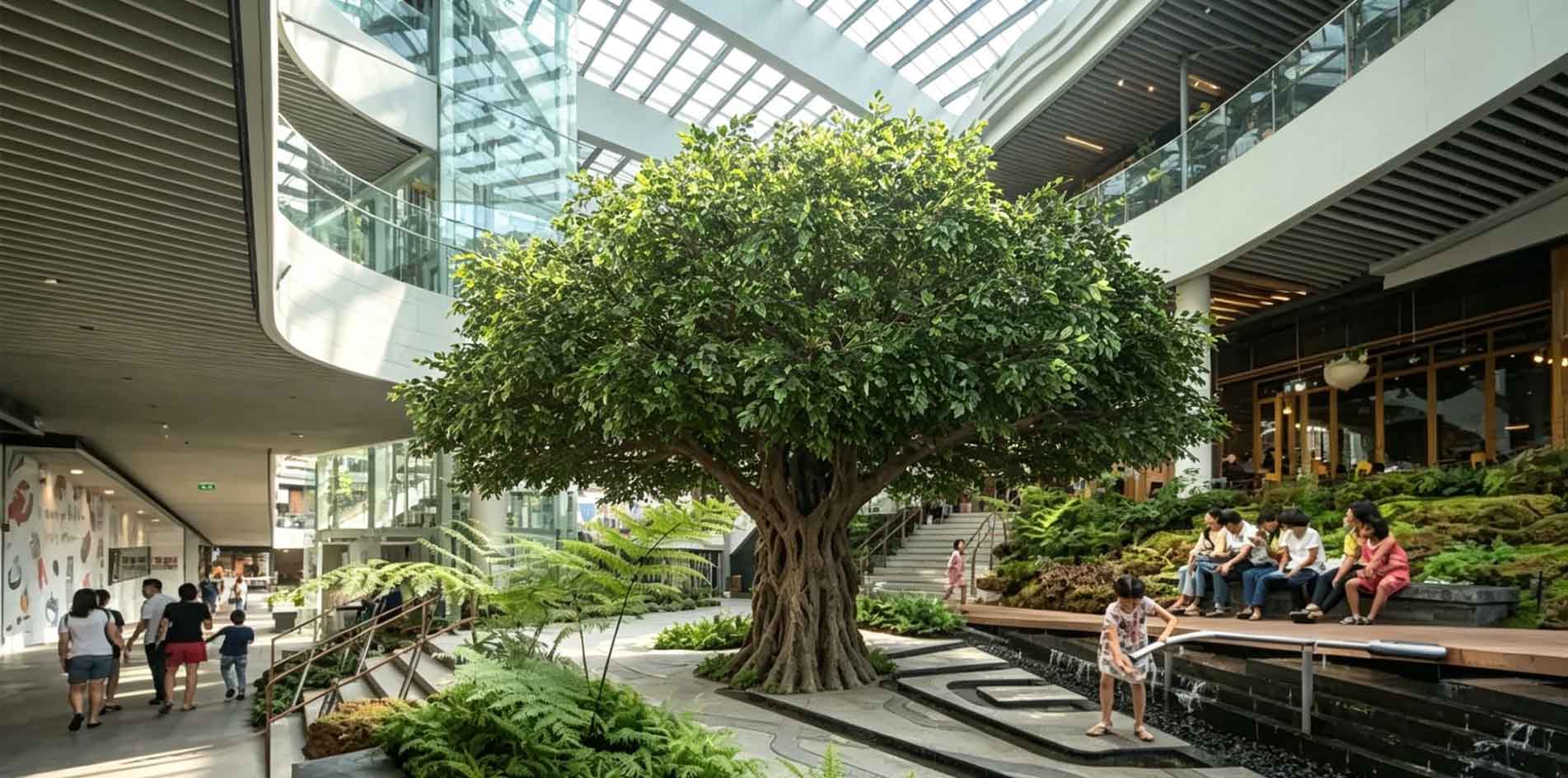
Crear un ambiente tropical exuberante y envolvente en propiedades comerciales —complejos turísticos, restaurantes de playa, patios de centros comerciales, vestíbulos de hoteles y terrazas de piscinas— solía depender exclusivamente de árboles tropicales naturales. Hoy en día, los árboles tropicales artificiales de alta calidad se han convertido en la solución ideal para paisajistas y empresarios que buscan una estética impecable durante todo el año con un mantenimiento mínimo. A diferencia de los ejemplares naturales, que se ven afectados por la iluminación irregular, las inclemencias del tiempo, el alto tránsito de personas y los estrictos programas de mantenimiento, los árboles artificiales de alta calidad brindan un encanto tropical instantáneo, adaptado a cualquier diseño y presupuesto comercial.
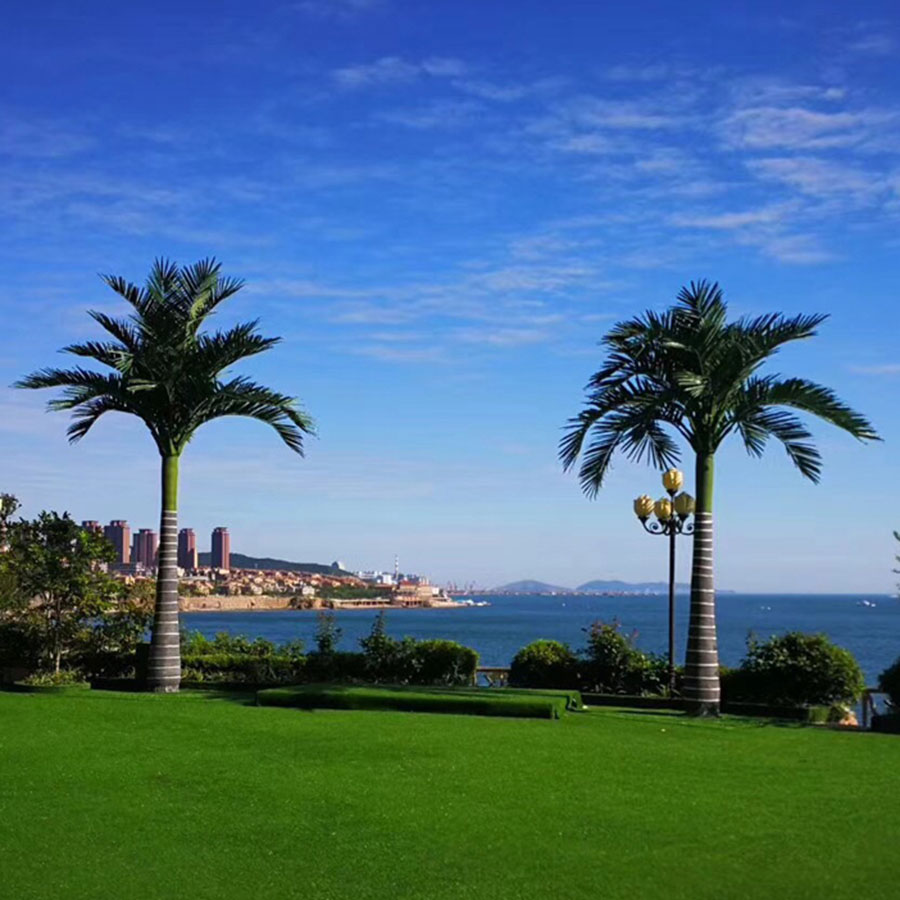
La mayor ventaja árboles tropicales artificiales La incorporación de plantas artificiales a los paisajes comerciales reduce drásticamente los costos operativos a largo plazo. Las palmeras, aves del paraíso y palmeras viajeras requieren riego, fertilización, poda, control de plagas y reemplazo estacional cuando las temperaturas o la luz no son las adecuadas. Para las empresas con múltiples ubicaciones o grandes espacios al aire libre, los gastos de mano de obra y riego se acumulan rápidamente. Las variedades artificiales de alta calidad solo necesitan una limpieza ocasional para mantener su viveza; las de calidad conservan su forma y color durante 3 a 5 años en interiores, mientras que los modelos para exteriores con protección UV se mantienen intactos durante tres años o más. Los equipos de mantenimiento eliminan los ciclos de reemplazo de plantas y liberan horas de trabajo del personal para brindar servicios esenciales a los huéspedes y clientes en lugar de dedicarse al mantenimiento del paisaje.
Seleccionar la especie de árbol adecuada para la función de su espacio comercial es el siguiente paso crucial. Las palmeras datileras y cocoteras gigantes actúan como puntos focales impactantes en las entradas de los resorts, las terrazas de las piscinas y las plazas abiertas de los centros comerciales, evocando instantáneamente la relajación playera. Las esbeltas palmeras areca y los bananeros artificiales suavizan los vestíbulos interiores, delimitan las zonas de asientos de los restaurantes y llenan atrios estrechos sin sobrecargar espacios más pequeños. Las llamativas palmeras viajeras y las monsteras artificiales de gran tamaño aportan un lujo tropical sofisticado a los hoteles boutique y los salones de tiendas de alta gama. Las compactas palmeras cycas funcionan de maravilla para delimitar bordes, agrupar macetas y crear zonas de sombra en los caminos, aportando profundidad y profundidad a los grandes diseños paisajísticos.
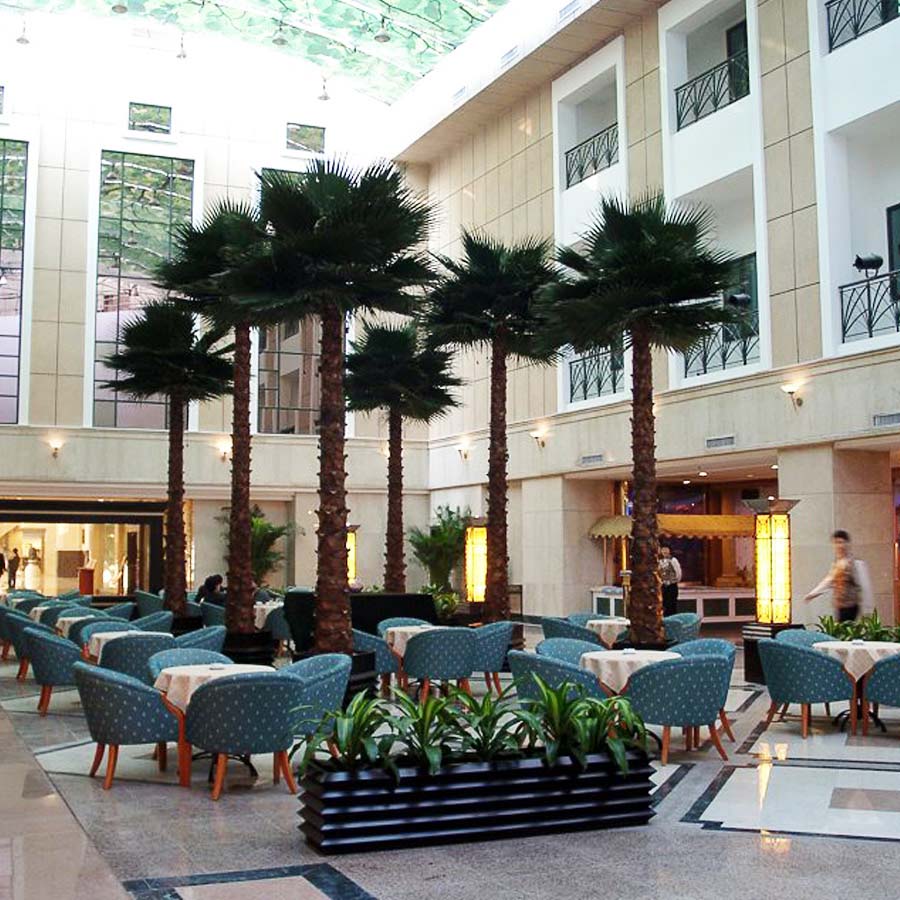
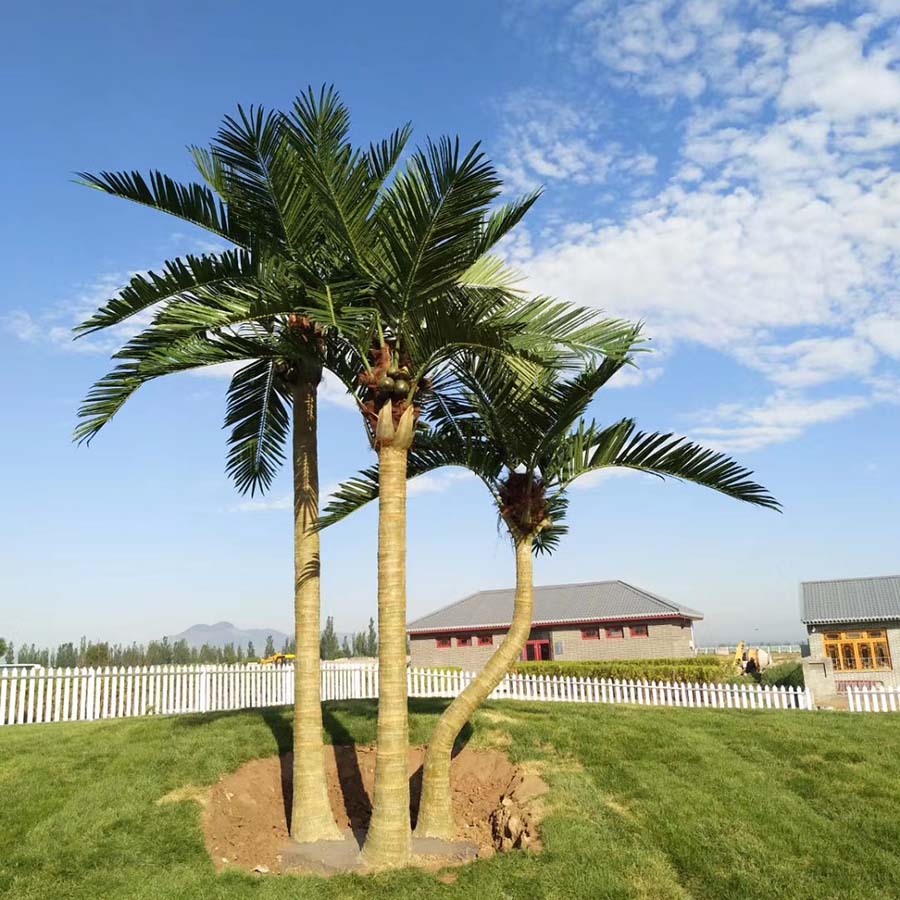
La calidad del material distingue los árboles artificiales decorativos baratos de los árboles artificiales de uso comercial, diseñados para un uso intensivo. Para instalaciones interiores, priorice las hojas elaboradas con seda recubierta, poliuretano (PU) o plástico PE grueso, con degradados de color naturales, detalles sutiles en las nervaduras y texturas realistas y mate que evitan el brillo del plástico. Los paisajes comerciales exteriores requieren follaje con protección UV integrada: los estabilizadores mezclados directamente con la resina evitan el amarilleamiento y la fragilidad bajo la luz solar directa; solicite siempre certificaciones de pruebas UV de terceros para construcciones exteriores. Los troncos reforzados con fibra de vidrio o acero son imprescindibles para zonas de mucho tránsito, ya que resisten golpes, ráfagas de viento y limpiezas frecuentes mucho mejor que los troncos de plástico huecos y endebles. Los espacios de servicio de alimentos deben especificar además recubrimientos ignífugos y resistentes al aceite en las hojas para cumplir con las normas de salud y seguridad.
La escala y la planificación del sitio evitan resultados paisajísticos desequilibrados y poco armoniosos, un error común en los pedidos de árboles artificiales al por mayor. Mida la altura de los techos, la superficie del patio, el espacio libre en los pasillos y la visibilidad desde los asientos antes de definir el tamaño. Los árboles demasiado grandes en vestíbulos bajos crean espacios reducidos y claustrofóbicos, mientras que los ejemplares demasiado pequeños no logran el impacto tropical que buscan las marcas comerciales. Los fabricantes profesionales ofrecen tamaños personalizados: puede ajustar la altura del tronco, la extensión del follaje y la densidad de las hojas para enmarcar perfectamente entradas, caminos de acceso o patios de comedor al aire libre. Agrupar árboles de diferentes alturas imita la estratificación natural de la selva tropical y añade interés visual en zonas planas del paisaje.
Las opciones de personalización permiten a las empresas alinear los paisajes con árboles artificiales directamente con su identidad de marca. Además de los tamaños estándar, los proveedores ofrecen texturas de tronco, acabados de corteza, tonos de verde de las hojas y soluciones de jardineras integradas a medida para combinar con la paleta de colores existente de paisajismo, azulejos o mobiliario. Muchos proyectos añaden sotobosque tropical artificial complementario —helechos, heliconias y hojas de palma— para completar los parterres de forma armoniosa. Las instalaciones a medida pueden incluso incluir estructuras de base lastradas para azoteas o ubicaciones costeras ventosas, lo que garantiza la estabilidad durante las temporadas de tormentas sin sacrificar la armonía del diseño. A diferencia de los árboles naturales con patrones de crecimiento fijos, los diseños artificiales permiten a los diseñadores plasmar sus visiones creativas con precisión desde el primer día, sin tener que esperar a que maduren lentamente.

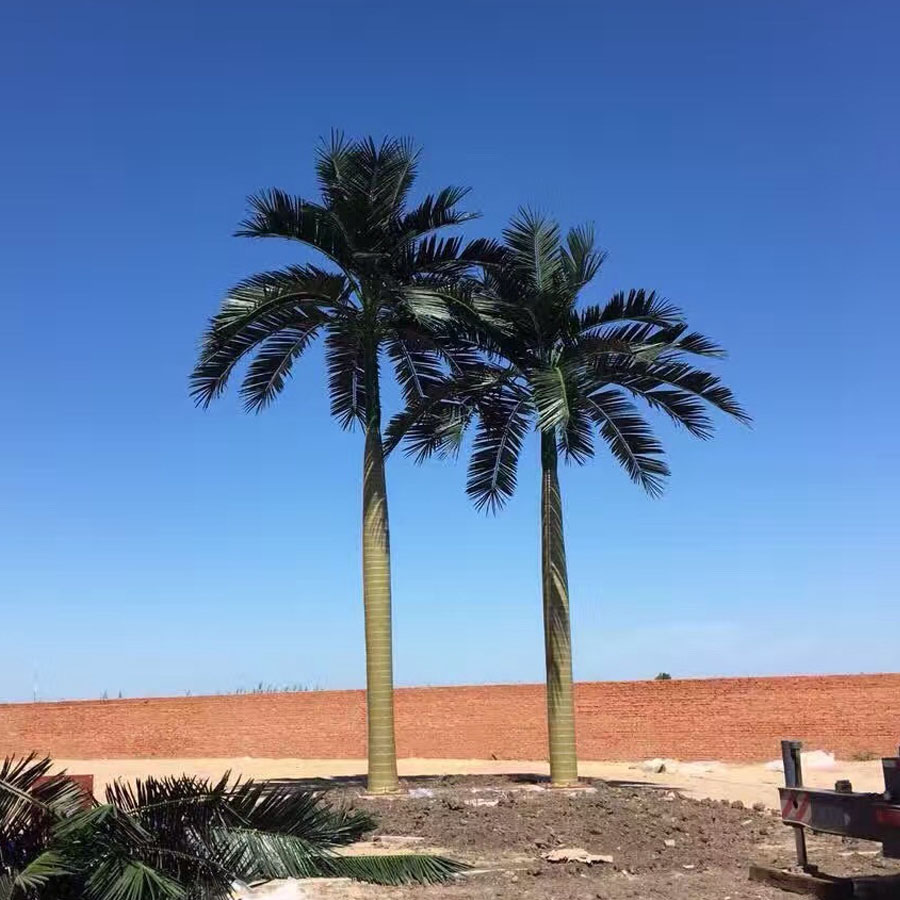
Por último, investigue a su proveedor para garantizar un soporte confiable de calidad profesional y el éxito del proyecto. Los fabricantes de renombre ofrecen estudios de caso completos para proyectos de paisajismo en el sector hotelero, minorista y turístico, condiciones de garantía claras para la vegetación y las estructuras, y embalaje seguro para envíos a granel que evita daños durante el transporte.