Simple Ways to Refresh Your Space with Fall Artificial Plants
As summer comes to an end, many interiors begin to shift from bright, fresh colors to warmer and more layered seasonal styles. You do not need to completely redecorate a room to create this change. A few carefully selected artificial plants for fall can introduce autumn colors, textures, and natural elements while keeping the existing greenery in place.
Unlike seasonal fresh flowers or live plants, artificial plants can be rearranged, stored, and reused from year to year. This makes seasonal decorating more flexible, especially for homes, hotels, restaurants, retail stores, and other spaces that need regular visual updates.
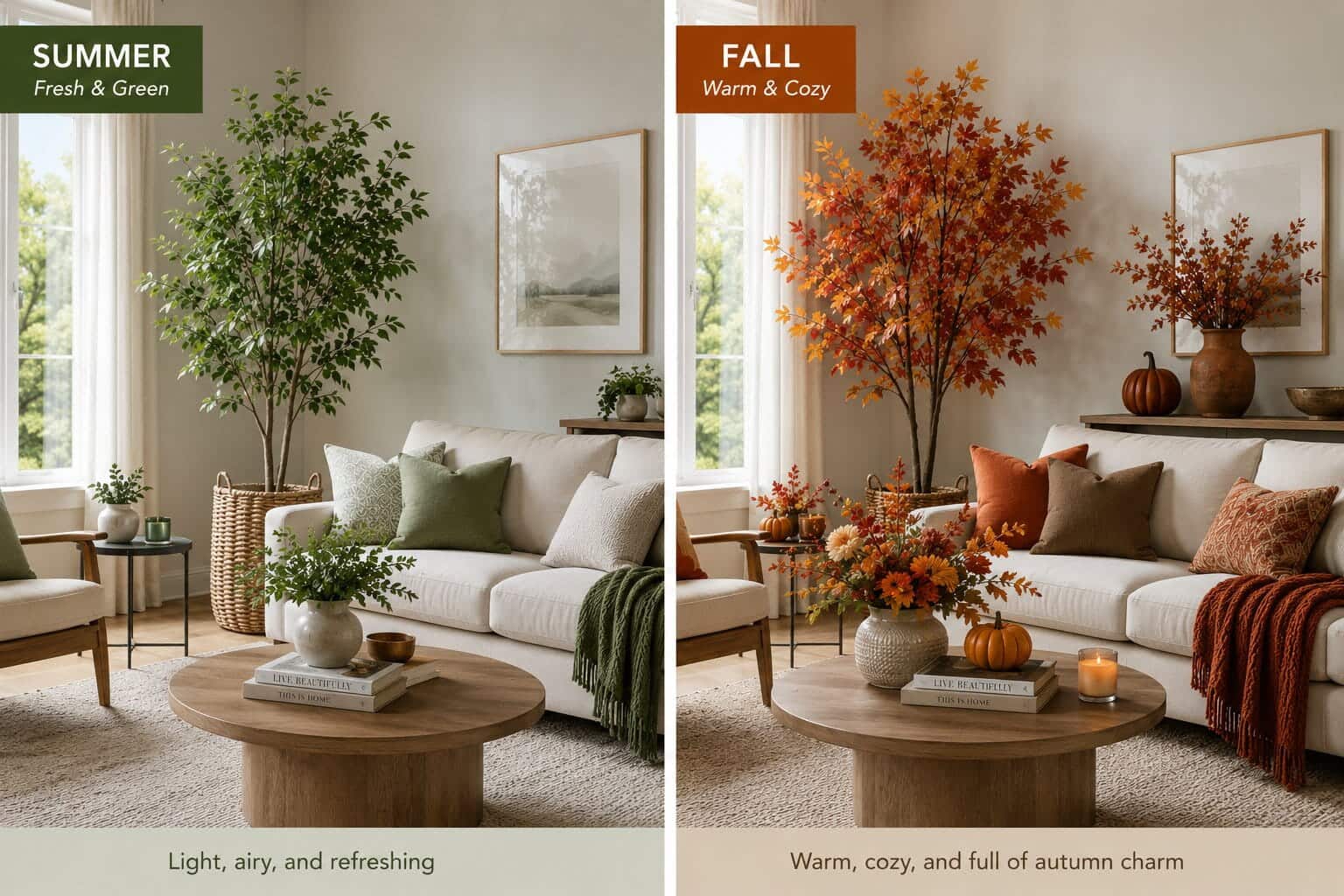
Why Change Artificial Plants for Fall?
Some common fall-inspired colors include:
- Warm green
- Golden yellow
- Burnt orange
- Rust
- Burgundy
- Brown
- Deep red
The goal does not have to be a dramatic transformation. In many spaces, keeping some summer greenery while introducing a few autumn elements creates a more natural transition.
Start with Your Existing Artificial Plants
Before adding new fall artificial plants, look at the plants you already have.
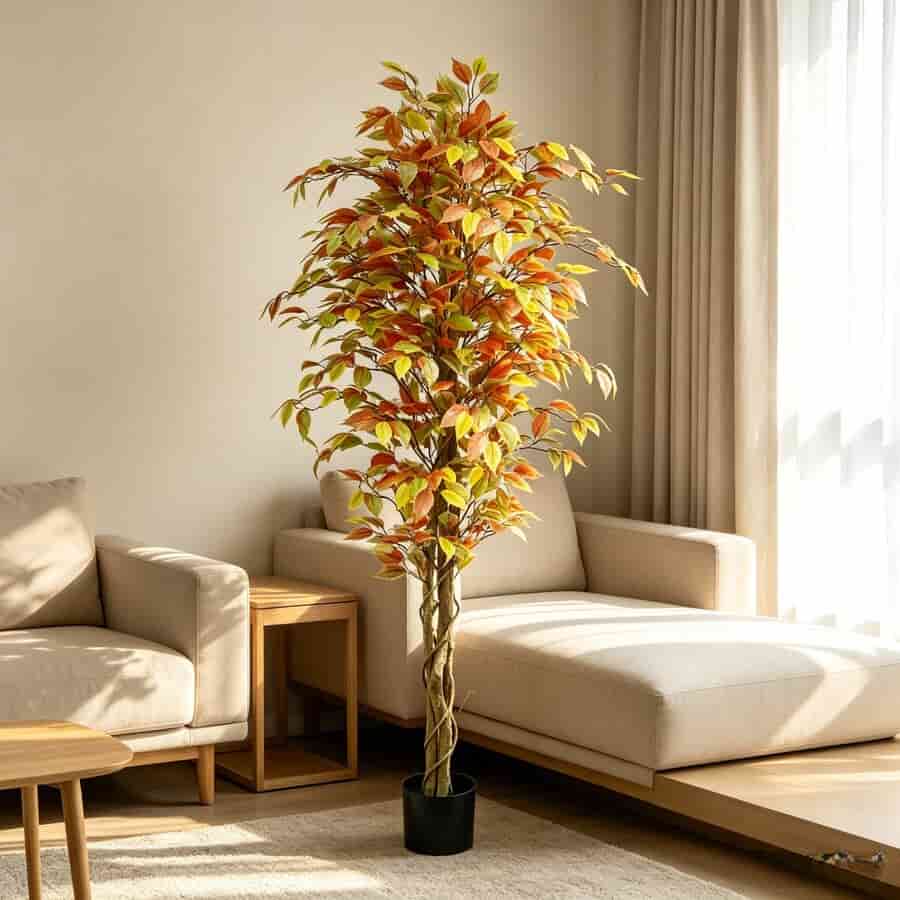
Large artificial trees such as fiddle leaf figs, ficus trees, olive trees, and eucalyptus can often remain in place throughout the year. Their green foliage provides a neutral foundation that works with different seasonal decorations.
Instead of replacing a large tree, consider changing the smaller elements around it.
Keep the Greenery
Green artificial plants can continue to work well in fall. Plants with realistic leaves provide a natural background for seasonal colors.
For example, an artificial olive tree can remain in a living room or hotel lobby while smaller fall branches, dried grasses, or warm-colored flowers are added nearby.
Add Seasonal Accents
Small changes can make a larger visual difference than expected.
Consider adding:
- Artificial maple leaves
- Faux autumn branches
- Artificial berries
- Dried-grass-style stems
- Warm-colored artificial flowers
- Seasonal wreaths
- Decorative planters
This approach allows the same artificial plants to work across several seasons.
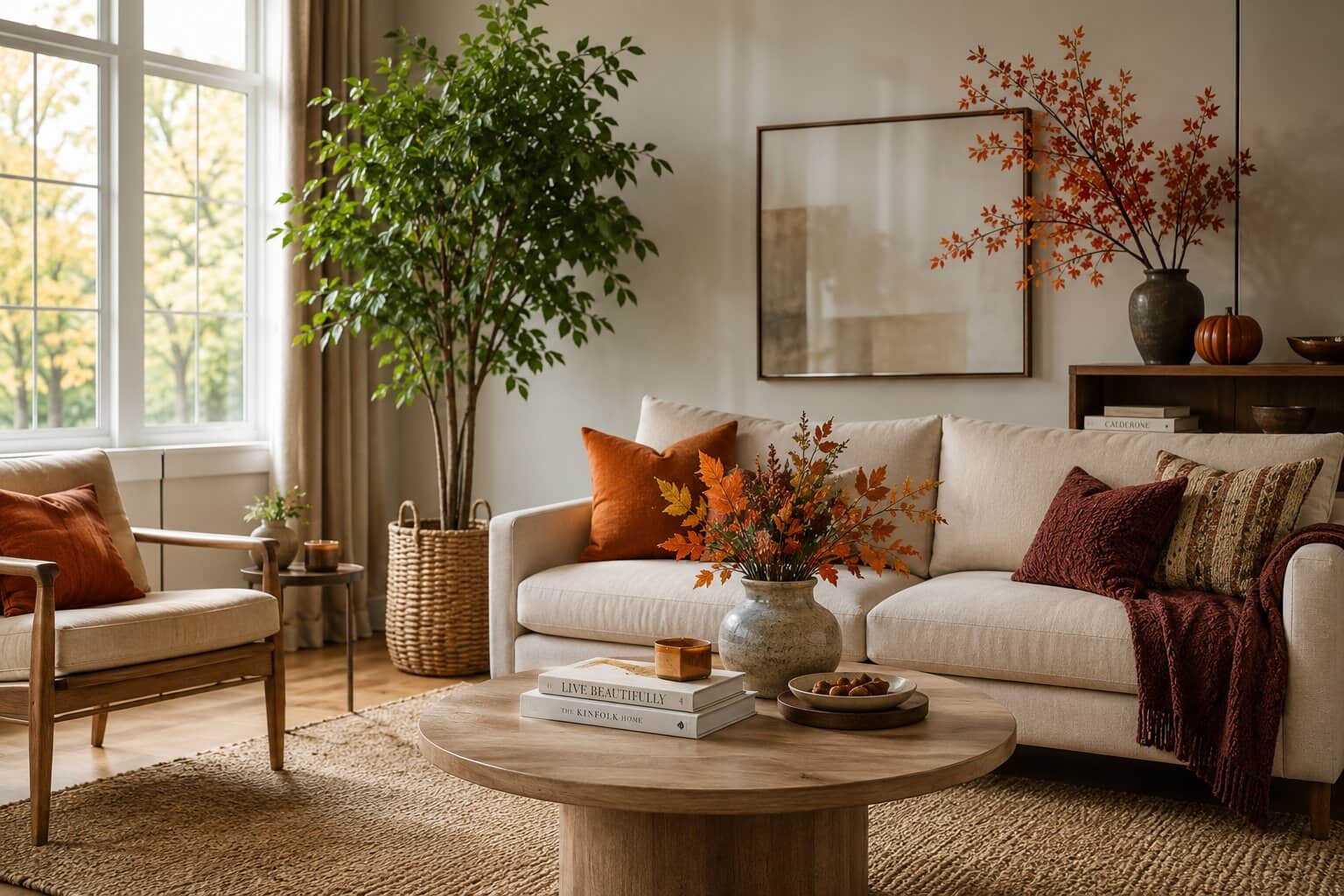
Choose Artificial Plants with Autumn Colors
Color is one of the easiest ways to create a fall atmosphere.
When selecting artificial plants for fall, look for foliage or flowers with natural variations rather than using one strong color throughout the room.
Artificial Maple and Autumn Trees
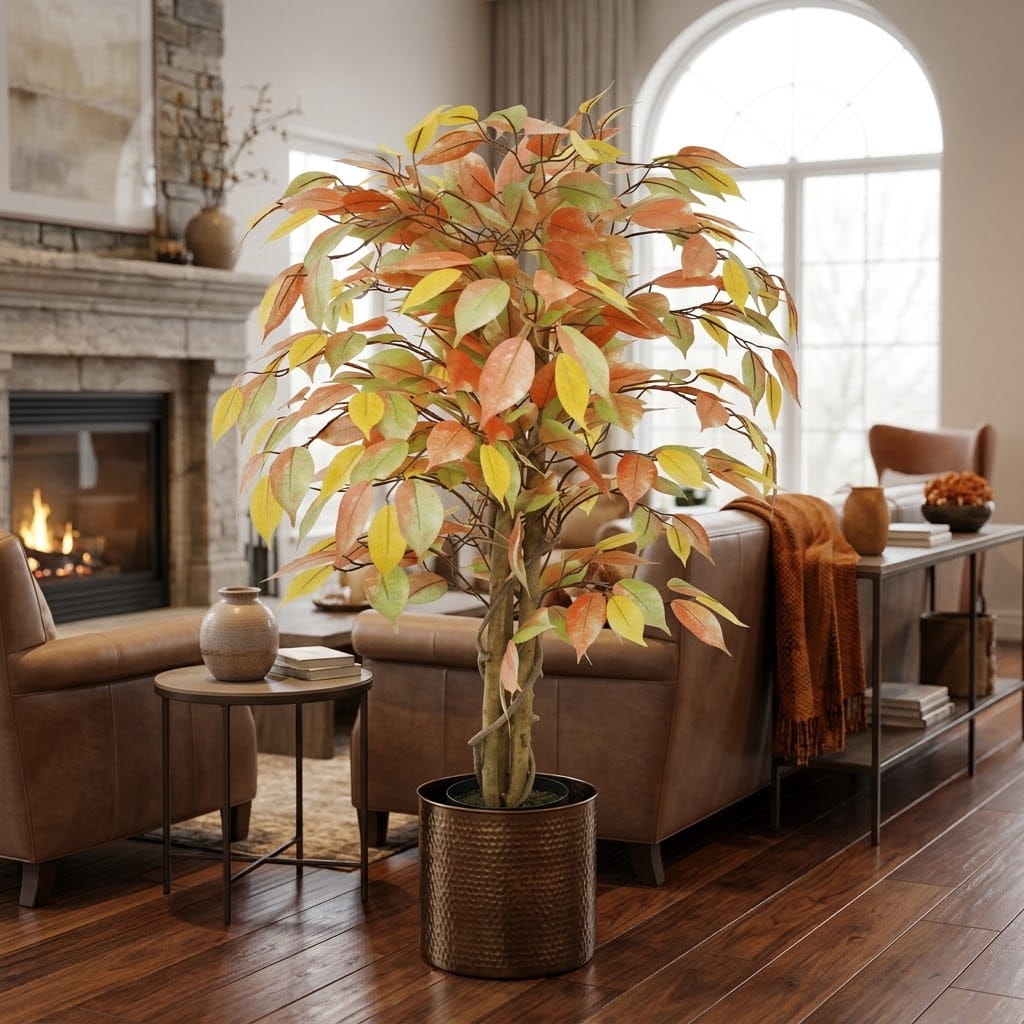
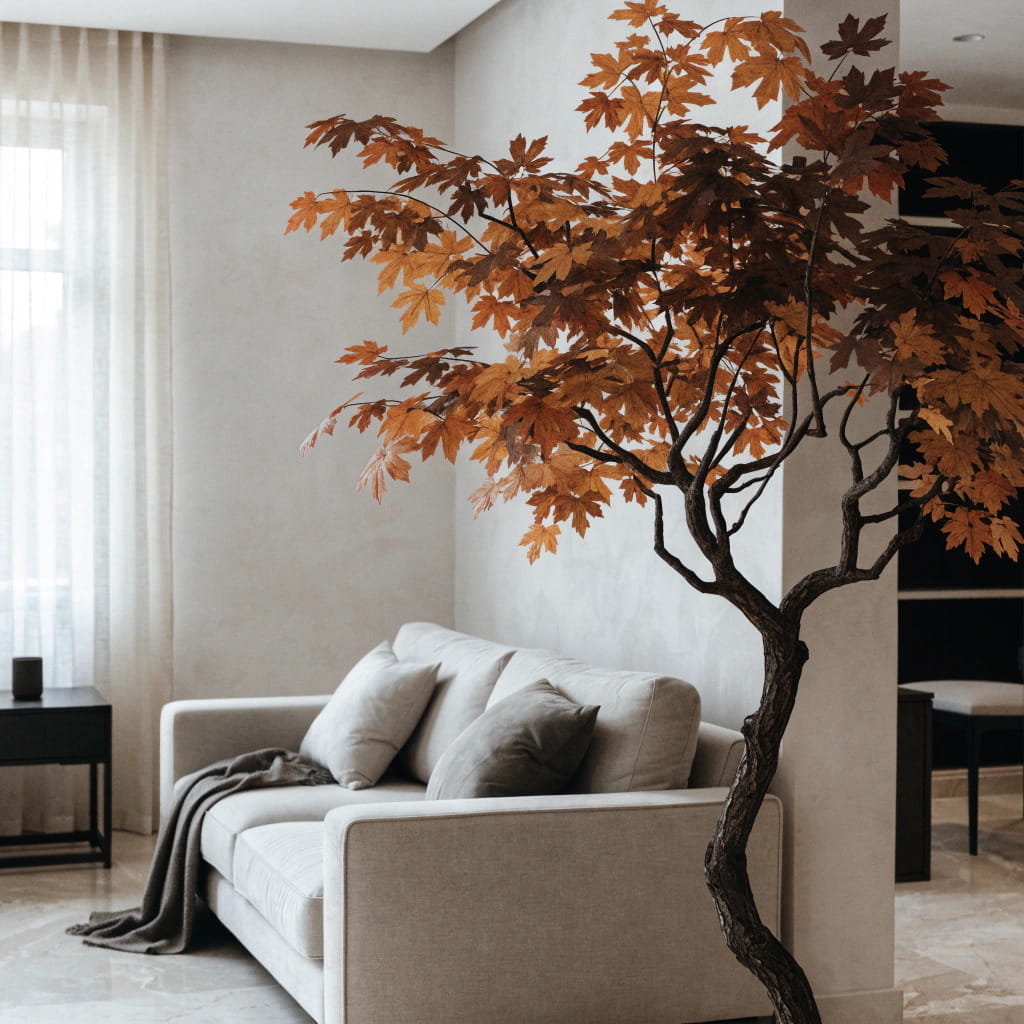
Maple-inspired foliage is closely associated with autumn. Artificial maple trees and branches can become a visual focal point in an entryway, living room, reception area, or commercial display.
For larger spaces, a tall artificial fall tree can add height and create a seasonal statement without requiring extensive decoration.
Artificial Branches and Stems
Branches and stems are useful when a full artificial tree would be too large.
They can be placed in:
- Glass vases
- Ceramic containers
- Decorative baskets
- Reception desks
- Dining tables
- Shelving units
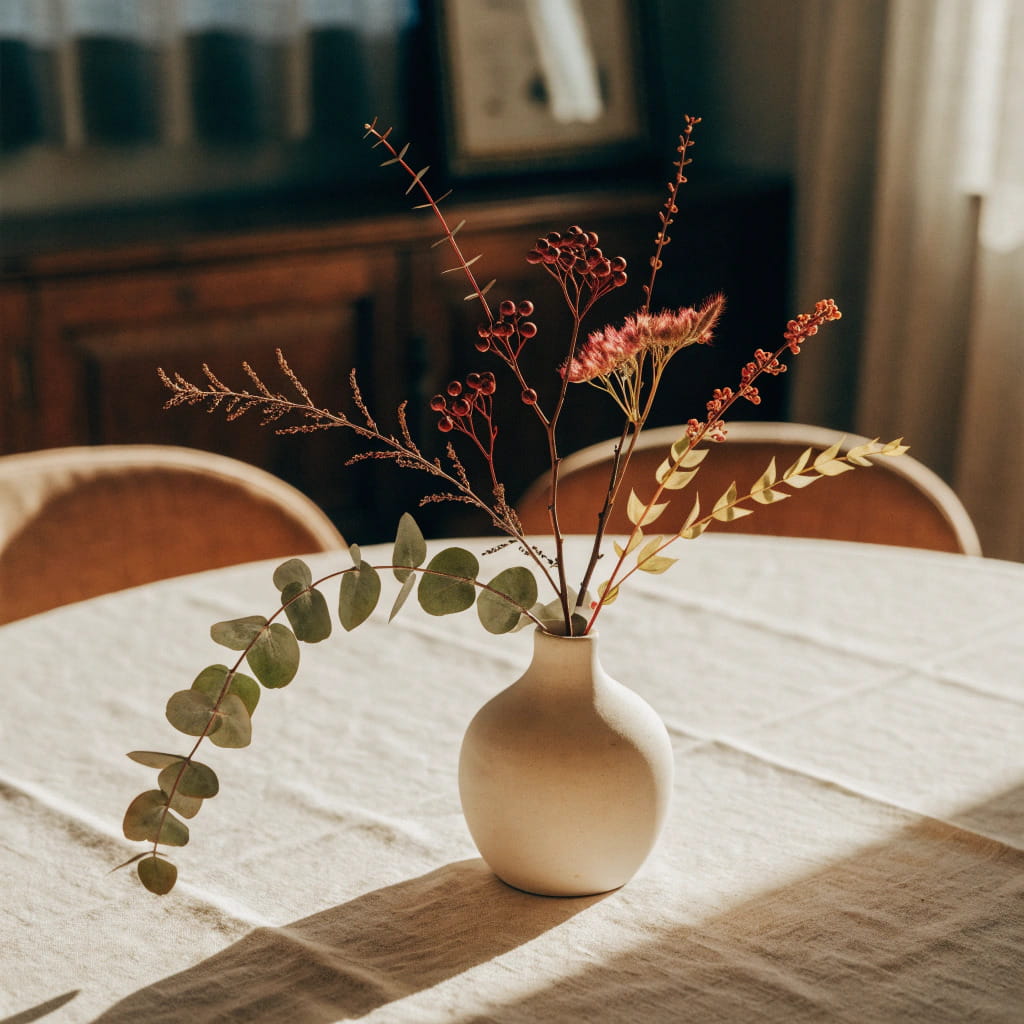
A combination of green foliage with orange, red, or golden stems can create a gradual transition from summer to fall.
Artificial Flowers
Artificial chrysanthemums, dahlias, hydrangeas, and other warm-toned flowers can add seasonal color to smaller areas.
A compact arrangement can work on a coffee table, countertop, reception desk, or dining table without changing the rest of the room.
How to Transition Room by Room
Different spaces require different approaches. The best artificial plants for fall should match both the size of the room and the way the space is used.
Living Room
The living room usually benefits from a combination of large greenery and smaller seasonal accents.
Keep an existing artificial tree in the corner and add a warm-colored arrangement to a coffee table or sideboard. A textured basket or neutral ceramic planter can also help create a warmer autumn appearance.
Entryway
The entryway is one of the easiest places to introduce seasonal décor.
A tall artificial tree can provide height, while a small arrangement or autumn wreath can add color around the entrance.
For larger entryways, two matching artificial trees can create a balanced appearance on either side of a doorway or console table.
Dining Room
The dining table provides an opportunity to use smaller fall artificial plants.
Instead of using a large centerpiece, consider a low arrangement of artificial foliage, autumn branches, or warm-colored flowers. This keeps the table practical while still introducing seasonal details.
Bedroom
Fall decorating in a bedroom usually works best when the colors remain subtle.
A small artificial eucalyptus plant, olive branch, or muted autumn arrangement can add seasonal texture without making the room feel overly decorated.
Commercial Spaces
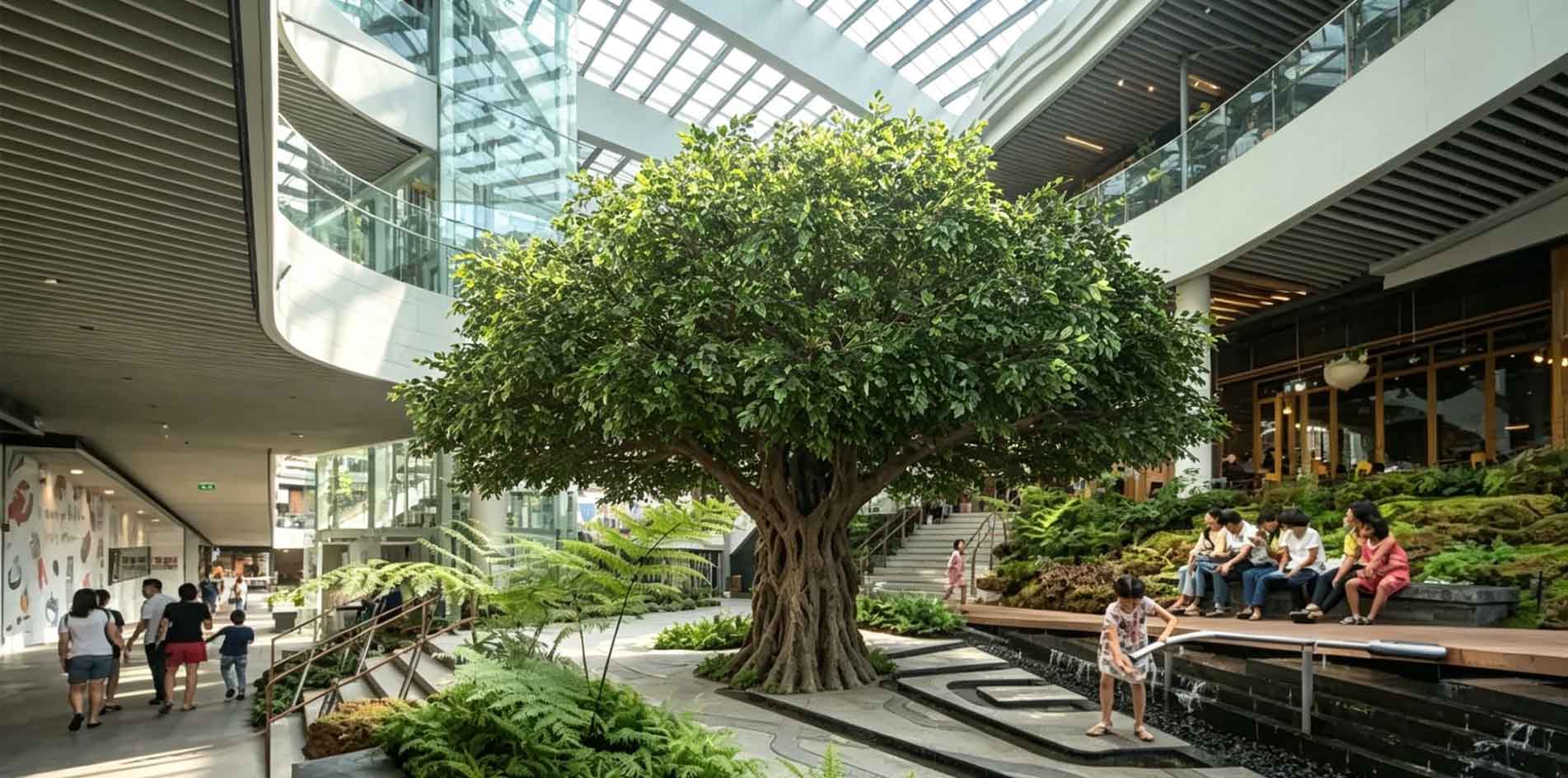
Hotels, restaurants, retail stores, offices, and event venues can also use artificial plants for fall to create seasonal displays.
For commercial spaces, larger artificial trees can define an area, while smaller arrangements can be used on reception counters, dining tables, shelves, or display areas.
Because artificial greenery does not require watering or regular pruning, it can also be easier to maintain during a seasonal display period.
Mix Summer Greenery with Fall Artificial Plants
A common mistake when decorating for fall is removing all green plants at once.
In many cases, a more balanced approach is to combine summer greenery with autumn elements.
For example:
Green artificial tree + warm autumn branches + neutral planter
or
Artificial eucalyptus + dried-grass-style stems + burgundy flowers
This combination creates a gradual seasonal transition rather than making the room look completely different overnight.
It also allows the same artificial plants to remain useful throughout the year.
Choose the Right Planter
The planter can influence the appearance of an artificial plant almost as much as the foliage itself.
For a summer look, lighter baskets and bright ceramic containers may work well. For fall, consider materials and colors such as:
- Terracotta
- Natural wood
- Woven baskets
- Matte ceramic
- Beige
- Brown
- Charcoal
- Warm white
Neutral planters are particularly useful because they can be reused with different fall artificial plants and seasonal arrangements.
How to Make Artificial Plants Look More Natural
Realistic appearance is important when using artificial plants as seasonal décor.
A few simple adjustments can improve the overall presentation.
Adjust the Branches
Artificial branches are often designed to be flexible. Spread individual stems and leaves slightly instead of leaving them in their original packed position.
Combine Different Textures
Mixing broad leaves, narrow grasses, branches, and flowers creates more visual depth.
Avoid Perfect Symmetry
Natural plants rarely grow in perfectly even patterns. Slightly different heights and directions can make an artificial arrangement appear more organic.
Keep the Base Simple
A clean planter or basket can help the foliage remain the main visual element.
How to Store Seasonal Artificial Plants
One advantage of fall artificial plants is that they can be reused.
When the season ends, clean the foliage gently and remove dust before storage. Store smaller stems and arrangements in a dry container where they will not be crushed.
Larger artificial trees may not need to be completely disassembled. If possible, keep them in a dry indoor storage area and protect delicate leaves and branches from pressure.
Good storage can help seasonal artificial plants remain useful for many years.
The transition from summer to fall does not require a complete change of décor. By keeping versatile green artificial plants and adding a few seasonal colors, textures, and accessories, a space can gradually take on a warmer autumn character.
From artificial maple trees and autumn branches to small floral arrangements and neutral planters, there are many ways to use artificial plants for fall in different settings.
The most practical approach is to build around existing greenery, introduce seasonal accents gradually, and choose pieces that can be rearranged or reused in future seasons. This creates a flexible decorating system that works for both residential and commercial spaces.